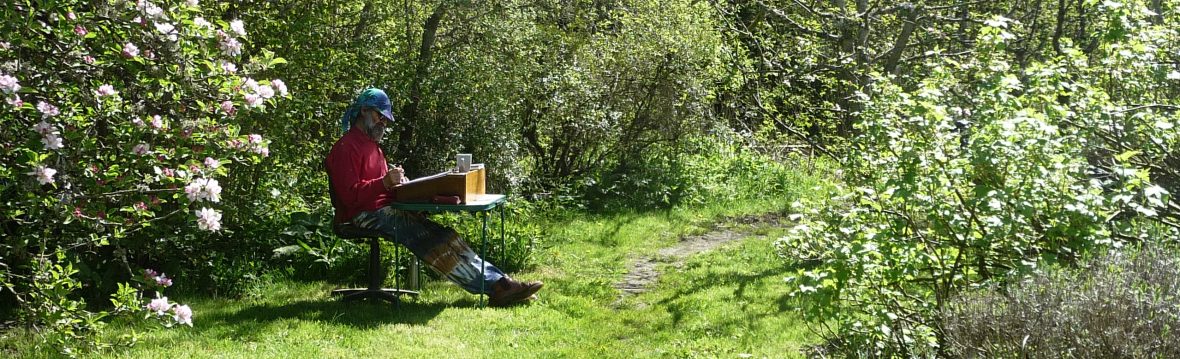
Helen Sedgwick is a multi-genre author of literary fiction, science fiction and crime. She writes about human connection across time and space, juxtaposing science with the supernatural and realism with ghost story. Before she became a writer she worked as a research scientist, first as a physicist (she has a PhD in soft condensed matter physics from Edinburgh University) and then as a bio-engineer. She’s also a literary editor. She founded Wildland Literary Editors in 2012 and was the managing director of Cargo Publishing and managing editor of Gutter. She is represented by Cathryn Summerhayes of Curtis Brown.

Geoff: What led you from a career in science to one in writing?
Helen: I was working as a postdoc in bioengineering when I did an evening class in creative writing tutored by Nick Brooks. I think I was in the process of realising that I didn’t want to stay in science forever. It had never occurred to me before that creative writing could be an actual career – but once I started writing I just didn’t want to stop.
Geoff: Where did you learn about the craft of writing?
Helen: After that evening class I applied to do an MLitt in Creative Writing at Glasgow University, where I was also still working as a bioengineer. I was able to spend the year trying out both versions of my life – studying for the creative writing master’s while still working part-time as a postdoc. By the end of the year, I knew it had to be writing. But learning the craft doesn’t happen in a year. I spent the next ten years learning how to write by doing it, I think. I wrote two novels and a short story collection that were never published before I finally wrote the book that became my debut.
Geoff: How did moving to the Highlands affect your writing?
Helen: It gave me both the headspace and physical space that I needed to keep going! In Glasgow, I had to fit writing around a stressful job, and a hectic life, and it’s hard (for me anyway) to think clearly in those circumstances in the way that I need to write well.
Geoff: How have you managed a multi-genre career when it is something the publishing sector generally discourages?
Helen: To be honest, I just do it regardless of the publishing sector! I write the books I am interested in writing, at the time when I’m interested in writing them. It’s not about pleasing the industry, for me, or writing to a particular marketing strategy or anything like that.
I have two different publishers, one who publishes my literary fiction and speculative fiction, and a second who publishes my crime. And I imagine I might end up with a third publisher for my next book(s) which will be science fiction. I think it’s helpful to realise that it’s okay to move publishers, for your career to change shape.
Geoff: Have you faced pressure to stick to one genre?
Helen: I must say no – my agent is very understanding and encouraging, and usually tells me to write whatever I want to write. The pressure is more self-inflicted when looking at sales figures and realising I’m probably not making my own life very easy!

Geoff: How do you balance writing time with parenting and home life?
Helen: With difficulty. I can only write when my daughter is at nursery. Because I’m chronically ill as well, by the time she’s in bed I need to go to bed myself, so writing late into the night isn’t an option for me anymore. Once she’s at nursery for the day, I always write first – before checking emails or doing admin. I write all morning, whatever else needs doing, and that way the writing gets done. It’s about acknowledging that priority and allowing myself to see it as valid and important.
Geoff: How does writing make you feel? Is it energising or exhausting? Does having it as a source of income affect your enjoyment?
Helen: Writing can be both energising and exhausting for me, and I think it’s easier for me to explain how I feel when I don’t write. If I stop writing, I get increasingly restless, frustrated, anxious, and angry. When I start writing again, I feel focused and grounded in who I am and what I’m doing. I suppose it gives me a sense of purpose. I find writing quite all-encompassing when I’m in the middle of it (while writing the first draft of a novel, for example) and then it’s energising and fascinating and I feel like I’m inhabiting it, but it’s also very hard to be pulled out of that, which inevitably happens. I tend to think of writing and editing as different parts of the process though. Once I’ve written that first draft, I can spend months or years editing – and that feels quite different, more conscious perhaps, more like work, more structured, more logical. Both parts of that process take a lot of energy, but also energise me at the same time!
I find having writing as my source of income sits uncomfortably with the creative process of writing. I’ve spent a long time trying to disentangle the two, or rather trying to stop all thoughts of income/sales/marketing from getting anywhere near my creative writing process. I don’t like being part of the “publishing industry” to be honest, and I have sometimes found it stifling. These days I think of my actual writing as something completely separate from being a professional author.
Geoff: Are there any conflicts between your scientific education and background and the supernatural, otherworldly elements in your novels?
Helen: I think my scientific background has somehow inspired the supernatural elements in my book! Any good scientist will tell you how much we don’t understand. Quantum mechanics, particle physics, cosmology, neurobiology, and even ecology all tell us that the world is far stranger than we can explain. For me, science was always about questioning, about being open-minded. The otherworldly elements in my book are a way of me saying – look deeper, think about this. We don’t know everything yet! Isn’t that fascinating?
Geoff: Have you witnessed any supernatural events? Do you believe in ghosts?
Helen: Well, I believe that the quantum world is weirder than any of us can imagine and that we are on the cusp of a profound change in how we conceive of the universe. Before we knew about atoms and molecules, the idea that solid everyday objects were composed almost entirely of empty space, held together by the forces between unimaginably small particles, would have seemed ridiculous. I think quantum physics is going to bring about a similar seismic shift in how we imagine the universe. Perhaps this time what we’ll learn is that the universe is not something composed of particles and “fundamental” forces, but rather the fabric of what we call space-time is made up of information rather than objects, and the connection between elements of quantum information is what everything is really made of.
I’m not sure I’d call that believing in ghosts, exactly! But it is about believing in the possibility that information and connection can outlive what we experience as macroscopic physical objects in a fundamental way that might make up the fabric of the universe.
Geoff: You launched your latest book, What Doesn’t Break Us, earlier this month, the third in the Burrowhead Mysteries trilogy – please tell us about it. How does it differ from ‘normal’ crime fiction?
Helen: The Burrowhead Mysteries trilogy is set in an isolated village on a wild and desolate coast, where historic prejudice and buried crimes are resurfacing to break the community. The villagers are haunted – in both real and metaphorical ways. The missing can speak, and their ancestors can be seen and felt.
In What Doesn’t Break Us, the third and final book of the trilogy, an unknown drug is spreading through the village, and DI Georgie Strachan must look to rituals of the distant past to make sense of it. But in the present, the police themselves are in turmoil as their own complicity in both current and historic crimes is revealed. Different types of community action offer both hope and risk, while the police station is closed for good and nature itself begins to fight back. I’m looking at themes of historic prejudice, inequalities, psychological and supernatural haunting, and the idea of meaningful reparation and restorative justice. The community is just as important as the police, and the type of resolution and justice often portrayed in crime fiction is challenged and subverted.


Geoff: What are the biggest influences on your writing?
Helen: Everything. I never know how to answer this question J Honestly everything from gardening and music to archaeology and science fiction. Memory. Chronic illness. Feeling like an outsider. Politics, injustice, inequality. The landscape I live in. Astronomy. Family.
Geoff: What do you read for pleasure, and do those books influence your writing in any way (or did they in the past)?
Helen: I read everything. There’s no genre I would avoid – though the very far commercial end of book publishing doesn’t appeal to me personally. I love books that challenge or surprise. I love books that are intelligent or subversive. I love science fiction, I love poetry. I love ideas. And I think everything we read and experience probably influences us, whether we want it to or not!
Geoff: Please tell us about your debut novel The Comet Seekers.
Helen: The Comet Seekers opens with two strangers meeting on a research base in Antarctica, as a comet fractures overhead. The story then loops back over a thousand years – every chapter is set when there was a great comet visible in the sky – to ask what happened in their own lives and in the lives of their ancestors to bring them both to that point. It combines real science and astronomy with ghost story, history, themes of memory and perception, and literary fiction.

Geoff: What can you tell us about your second novel The Growing Season.
Helen: The Growing Season is a science-fiction novel set in an alternate reality similar to our own except that artificial wombs have become the norm. Pregnancy takes place outside the human body in “baby pouches” that can be carried by women or men, and a private company owns and markets the technology. The novel explores what happens when biotechnology meets the human body, the future of reproduction, the commodification of medicine, different types of feminisms, power hierarchies, the dangers of capitalism, and our potential for equality.
Geoff: How do you feel about the prospect of scientific technology offering women the choice of external gestation?
Helen: I think it’s great – sign me up!
More seriously, for me everything comes down to choice. I wish I’d had more choice. But it has to be every woman’s individual choice; it should never be manipulated through money or power, and must never be coerced or used as a means of control. Technology is neutral – it can be used as a force for good or bad. I believe the technology I described in The Growing Season is coming, it could be lifesaving and life-changing, and I hope we will use it to offer women choice and all the potential benefits from increased health to social equality that could come with it.
Geoff: Part of The Growing Season is set in a stunning coastal location. Why do you think so many writers and artists find the Scottish coastline so inspiring?
Helen: It’s just so beautiful, isn’t it? But then there is something brutal about it too, perhaps it’s the combination. And for me, there’s an expanse when looking out to sea that I find very inspiring.

Geoff: In your fiction, are you trying to get messages across to your readers that reflect your views and beliefs on political, ethical or social issues?
Helen: That’s a very good question and one that I find hard to answer. My writing is very political and is driven by what I think and how I see things, and what I’m questioning or curious about, sometimes what I’m angry about, or what I want to change, what I hope for. That said, I absolutely don’t see my role as a writer to pass those beliefs onto the reader. If I want the reader to do anything, it’s to question more, to question their own beliefs, to question mine, to think in fresh ways. It’s important to me to reflect multiple points of view in my work – that’s why I write from so many different perspectives using diverse ranges of characters. I think having the purpose of delivering a message to the reader would destroy the story, to be honest. I strive for more complexity than that. I want to represent the whole range of humanity, and then ask: how could this be different?
Geoff: What are you currently working on? Which themes does it explore?
Helen: I’m currently writing a science fiction series, for which I was awarded the Creative Scotland Dr Gavin Wallace Fellowship (more details https://www.creativescotland.com/what-we-do/latest-news/archive/2021/07/helen-sedgwick-appointed-2021-dr-gavin-wallace-fellow and https://medium.com/creative-scotland-literature/update-from-our-dr-gavin-wallace-fellow-2021-ce6fee731636).
The series is set on four different planets, looking at the surviving human societies attempting to rebuild after environmental collapse. It is about how technology intersects with nature, the interplay between local community and planetary change, and our connection to land, time, and one another.
On one planet, a small community live without ownership, law, or technology, until a stranger arrives to question the careful balance of their conflict-free existence; thousands of light years away, advanced technology saves some and leaves others to die on a planet suffocating from extreme air pollution, raising questions about the reach of human empathy, what we see as disability, who is considered of value, and why. Elsewhere we see quantum technology offering new forms of societal cohesion and different visions of what family could be, and as the series progresses, we see the stories connecting using ideas from quantum entanglement.
Huge thanks to Helen Sedgwick for agreeing to this interview and giving such fantastic responses.

 Geoff King
Reminds me very much of reading Carl Sagan version of the Chaos Theory, many moons ago. I wonder if either of you have read it and if so any influences stuck. Good interesting interview. I think there are many versions of the way people think, and believe. I should admit to being a cousin of Geoff. But that bares no influence on my opinions.